
How do you clean a granite sink?
The best products for cleaning a granite sink are mild washing-up liquid, soft sponges and a homemade paste of bicarbonate of soda and vinegar, which safely dissolves limescale deposits. Regular care and protection of composite surfaces help prevent permanent discolouration. This guide covers effective cleaning methods, the differences between maintaining light and dark models, and the principles of everyday care.
Characteristics of granite sinks
Granite sinks combine natural aggregate with flexible resins, giving them exceptional resistance to mechanical damage, scratches and thermal shock. However, this particular construction means that the composite surface is slightly porous. Microscopic gaps, invisible to the naked eye, collect limescale from hard water, small particles of grease and food residue. If these deposits are not removed systematically, the Finish quickly becomes dull and difficult-to-remove stains develop.
Proper care must take the material's properties into account. Although the composite is exceptionally hard, it remains highly sensitive to strongly corrosive chemicals and mechanical abrasion from sharp scourers. Understanding this relationship helps you select safe methods that dissolve dirt effectively without damaging the satin Finish. Reputable manufacturers, including Kuchinox, design their sinks for maximum practicality. Nevertheless, the service life and appearance of every product depend directly on conscious use. A smooth external surface will not remain intact if aggressive detergents that are unsuitable for this type of material are used.
Black versus light granite sink
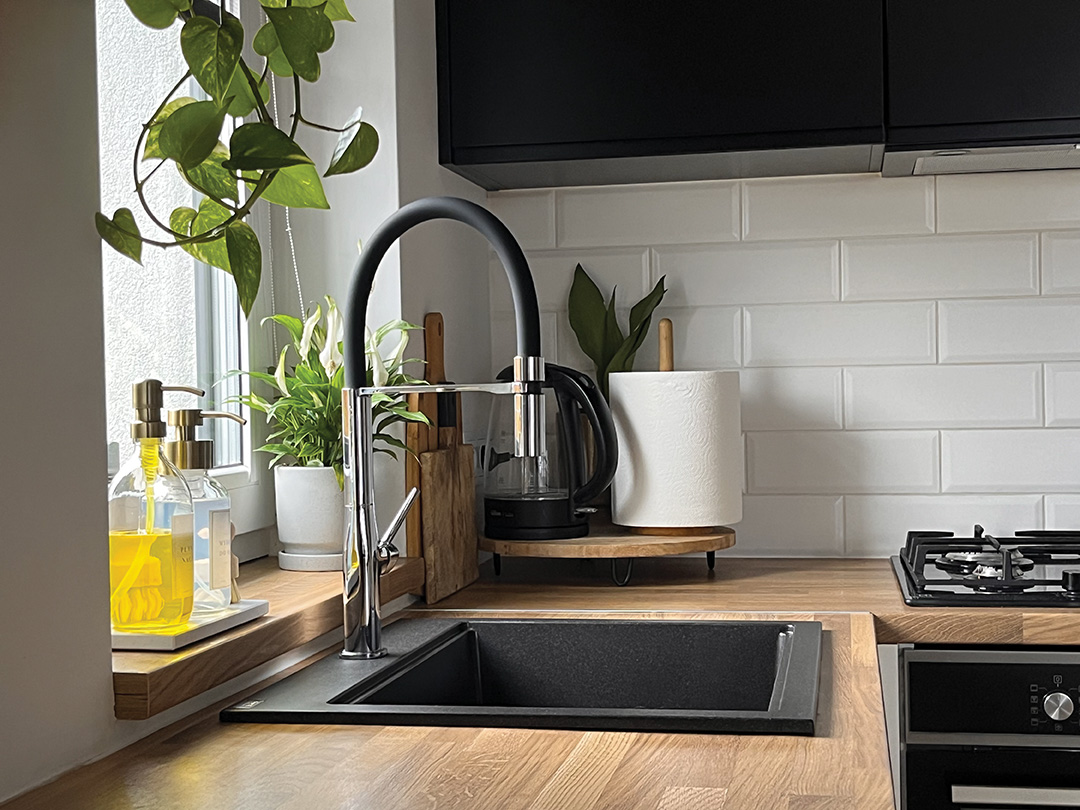
The colour of the composite directly determines which types of dirt are most visible and dictates a particular daily cleaning routine. Granite sinks in dark colours, such as deep Black or Graphite, reveal pale limescale deposits and dried water droplets very quickly. Users of these models should wipe the Bowl dry after every use to prevent unattractive white streaks and water marks on the bottom.
Light-coloured models, such as Beige, sand or cream, conceal hard-water deposits very well but are much more susceptible to absorbing strong food colourings. Coffee, tea, red wine or beetroot juice left in the Bowl may cause permanent discolouration. Regardless of the chosen colour, the material requires the same care when selecting detergents. The main difference is the type of dirt to which household members need to respond first.
Cleaning a granite sink
The foundation of keeping the composite in excellent condition is to rinse away residue with warm water every day and wipe the Bowl dry immediately after washing the dishes. This simple habit substantially limits the build-up of limescale and inhibits bacterial growth in the wet area. For regular washing, the soft side of a sponge with standard washing-up liquid is entirely sufficient. It removes grease effectively without affecting the sink's structure.
After the entire working area has been cleaned thoroughly, including the joints around the Kitchen mixer and the drain flange, rinse away the remaining foam with a strong stream of running water. Leaving moisture on the bottom is the quickest route to a new layer of limescale. The most important stage of everyday hygiene is the final drying of the material with an absorbent paper towel or soft microfibre cloth. Physically removing the droplets completely prevents minerals from precipitating during natural evaporation.
Which cleaning products should you use?
Safe cleaning of composite fittings relies on mild products with a neutral pH or specialist liquids without sharp abrasive granules. Dedicated granite cleaners work in two ways: they dissolve accumulated dirt precisely and leave a delicate protective film that makes it harder for food particles to adhere again. For light soiling, standard shower gel or mild liquid soap will work just as well as a washing-up liquid.
Scouring powders, cream cleaners containing strong abrasive particles and aggressive descaling products based on corrosive acids must never be used. Chemicals of this type permanently damage the composite's upper protective layer and cause micro-scratches. A degraded and scratched structure becomes dull and begins to absorb dirt much more readily, leading to irreversible visual damage. Before using any new chemical detergent, test it on a concealed area beneath the worktop. Ordinary mild washing-up liquid remains the safest and most versatile choice for everyday care.
Home methods for cleaning a granite sink
A mixture of bicarbonate of soda and spirit vinegar is the most effective natural alternative to expensive chemical products available in shops. Bicarbonate of soda has mild abrasive and brightening properties, while acetic acid dissolves stubborn mineral deposits. For deep cleaning, sprinkle bicarbonate of soda evenly over the damp Bowl and then spray it generously with vinegar from a spray bottle. The active foam created by the chemical reaction safely lifts dirt away from the structure.
Instead of using loose powder, good results can also be achieved with a thick paste made from bicarbonate of soda and a small amount of lukewarm water. Apply the mixture directly to the most heavily soiled areas. After approximately 15 minutes, wipe it with a soft sponge without using excessive force, then rinse it away with lukewarm water. These methods are harmless to household members and the environment and do not cause the colour to fade. Regular use of household substances significantly extends the period during which the washing area remains reliable and attractive.

Removing stains and limescale
Dried limescale and established juice stains require targeted local treatment because routine washing will not remove a crystallised layer. If heavy limescale has formed around the drain or the base of the Kitchen mixer, the best method is a vinegar compress. Soak paper towels generously in vinegar and place them closely around the affected areas. Leave the compress on the surface for at least half an hour so that the organic acid can soften the hard mineral structure completely.
Stubborn coffee, red wine or turmeric stains on light-coloured sinks are best removed with a paste of bicarbonate of soda applied precisely to the affected area. It is very important not to rub these areas aggressively with a rough scourer. Excessive pressure will make the smooth Finish locally dull and scratched, which will only make the problem worse in the future. Once the deposits have dissolved, rinse the Bowl with plenty of water and wipe it dry immediately with a cloth.
Maintaining a granite sink
Regular surface protection closes the micropores in the composite structure and creates a hydrophobic barrier that repels water, dirt and colouring particles effectively. This treatment prevents substances from penetrating deep into the material and makes subsequent cleaning as simple as possible. Protect the surface only after the sink has been cleaned thoroughly and dried completely, repeating the process approximately once a month.
The protective layer can be applied with a specialist impregnating product from a shop or with a proven product from the kitchen cupboard: ordinary cooking oil. Apply a small amount of rapeseed, sunflower or linseed oil to a paper towel and rub it carefully over the entire Bowl and Drainer. After approximately 15 minutes, polish away the excess oil with a dry cloth until the surface has an even satin sheen without greasy streaks. Correctly applied protection causes water to bead immediately and flow freely towards the drain.
What should you use to clean a granite sink after protecting it?
A protected composite surface requires only the mildest detergents to prevent the applied protective layer from being washed away prematurely. Ordinary washing-up liquid used with the smooth side of a sponge remains the most suitable product. Strong cleaning chemicals, powerful degreasers or abrasive cream cleaners will immediately dissolve and damage the hydrophobic film, undoing the effects of the entire treatment.
The protected, slippery Finish prevents dirt from adhering to the bottom, so aggressive scrubbing becomes completely unnecessary. Daily cleaning consists of gently wiping food residue from the Bowl, rinsing it with lukewarm water and drying it with a microfibre cloth. When water droplets stop forming even beads and begin to spread flat across the bottom and soak into the material, the protective layer has been washed away and the treatment should be repeated promptly.
FAQ: frequently asked questions
How do you remove stubborn white deposits from a sink?
The best method for white limescale deposits is to place paper towels thoroughly soaked in vinegar over the affected area. Leave the compress for approximately 30 minutes, then gently remove the softened limescale with a soft sponge.
Can a granite sink be cleaned with drain unblockers such as Kret?
Drain unblockers are highly corrosive and must never come into contact with a composite surface. Accidentally spilling and leaving them on the sink can cause permanent discolouration and chemical damage to the micropores.
What can be used to oil a granite sink after thorough cleaning?
Edible vegetable oils, such as rapeseed, sunflower or linseed oil, work very well for oiling the composite. Rub on a thin layer with a paper towel and polish away the excess with a dry cloth after fifteen minutes.
How do you remove tea stains from a light-coloured sink?
Tea stains can be removed quickly with a thick paste made from bicarbonate of soda and a small amount of water. Apply the paste directly to the stain, leave it for approximately 15 minutes, wipe gently and rinse with warm water.
Can wire scourers be used to clean dried-on dirt?
Wire scourers, metal brushes and the rough sides of cleaning pads must never be used on granite surfaces. Friction from metal will permanently scratch the composite structure, causing the sink to become dull immediately.
How often should a composite sink be washed and dried?
Rinse the Bowl and wipe it dry with a cloth or paper towel after every use and every time you wash dishes. Deep cleaning with detergents and any necessary limescale removal should be carried out at least once a week.


