
Matching the washing area to cashmere-coloured cabinet fronts requires consideration of the material’s technical parameters and the consistency of the finishes. Granite models in Beige and sand shades, as well as Stainless steel variants with PVD coatings, are particularly suitable. The following article explains how the properties of individual components affect the durability of the working installation and how to fit the fixtures correctly to ensure full ergonomics and resistance to damage.
What does a cashmere kitchen look like?
Cashmere cabinetry is based on fronts in a colour that combines delicate Beige with light grey, usually finished in a deep matt or semi-matt texture. This type of surface strongly diffuses incoming light, making it necessary to plan artificial lighting carefully and use materials with a suitable texture in the work area.
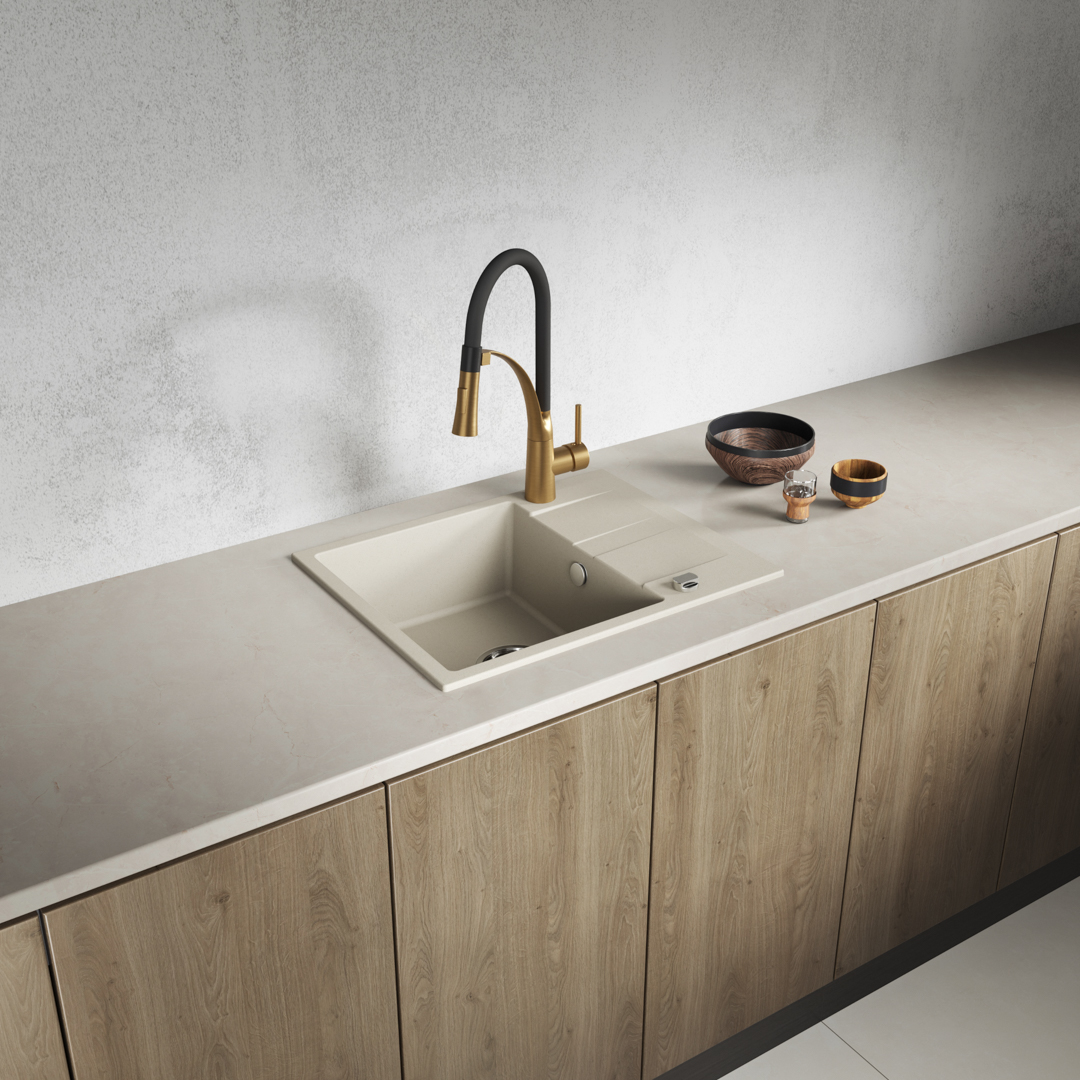
The use of matt polymer lacquers makes this shade highly responsive to the colour temperature of the surrounding light. Under warm lighting, it takes on sandy tones, while cooler light brings it closer to ash grey. This effect directly requires worktops with a defined structure that provide a stable base for the installation of bathroom or kitchen fittings.
The worktop surfaces most commonly used in cashmere-based designs include:
- Natural wood (walnut or brushed oak): Natural wood brings warmth to the work area but requires regular oiling and impregnation, particularly along the cut-out made for the sink Bowl.
- Compact HPL boards: They provide a completely waterproof core, allowing the use of exceptionally thin worktops only 12 mm thick.
- Quartz engineered stone: It offers extremely high density and resistance to mechanical damage, providing a suitable surface for the direct installation of Undermount sinks.
The cashmere colour in kitchen design
The cashmere shade requires careful coordination of installation details, including cabinet handles, plinth elements and visible plumbing components. Complete consistency in the washing area is achieved by applying one finish palette across all metallic details.
Installing Brass or Copper fittings with a physically vapour-deposited PVD coating guarantees the highest resistance to abrasion and corrosion caused by water exposure. PVD technology penetrates the alloy structure, hardening the surface and protecting the body against tarnishing caused by aggressive detergents or hard mains water. Properly shaped Upright kitchen mixers become a central contrasting feature in this setting, breaking up the uniform background of the cabinetry.
Combining cashmere boards with cool Stainless steel works particularly well in raw, technical interiors, while Brushed gold complements designs based on a warm colour temperature. The chosen colour arrangement determines the connection parameters and the type of water treatment systems used. Mixers with a water filtering function require additional space inside the base cabinet for multi-stage carbon cartridges and the weights used with pull-out flexible hoses. This should be decided before plumbing pipes are routed out of the wall.
A cashmere sink for the kitchen
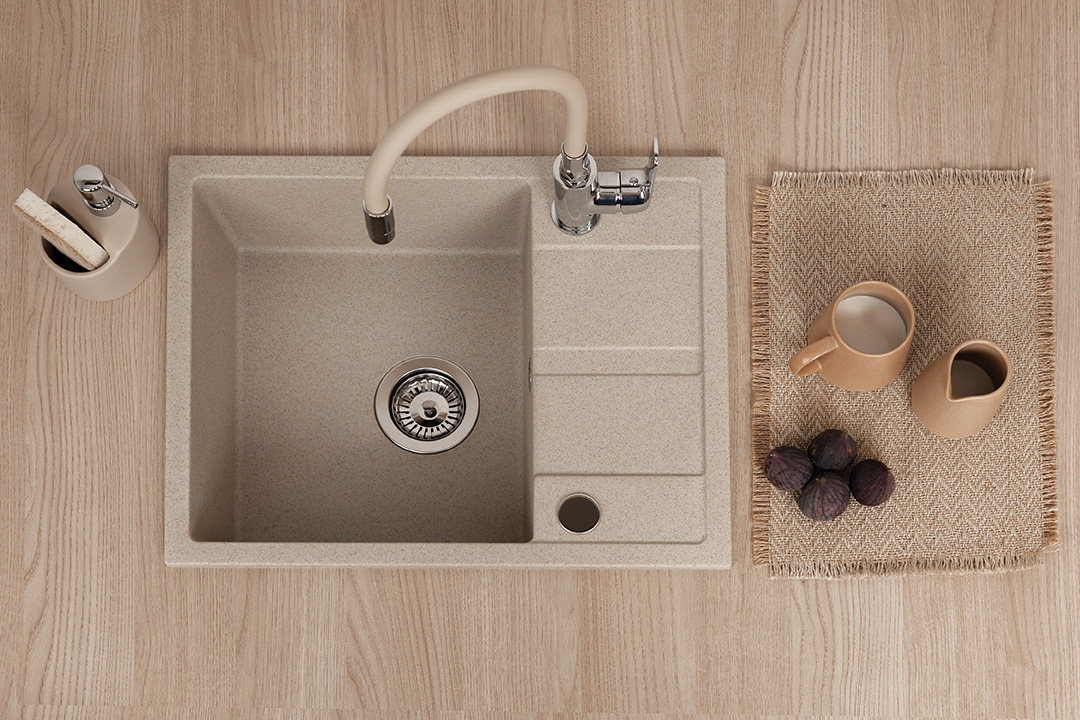
Light granite sinks in sand, Beige granite or White granite finishes are an ideal complement to cashmere-coloured cabinet fronts, creating a cohesive work surface without sharp visual divisions. The composite, made primarily from natural quartz aggregate bonded with synthetic resins, withstands mechanical impacts from heavy cast-iron cookware and sudden temperature changes caused by pouring boiling water into the waste.
An alternative design introduces a strong contrast by installing sinks in Graphite or deep Black. A Smooth, uniform surface limits the adhesion of limescale deposits inside the Bowl, significantly reducing the time required to clean the washing area and removing the need to use caustic acidic cleaning agents during everyday maintenance.
Planning the washing installation requires the correct dimensions for the working Bowl. 1-bowl sinks from the Sinks without drainer category save valuable space on the main worktop and provide ergonomic support for a dishwasher positioned in the same run. 1.5-bowl sinks provide an additional small waste Bowl that makes it easier to rinse fruit or cutlery while the main Bowl is in use. However, they require a base cabinet with a minimum installation width of 60 cm.
Practical considerations when choosing a sink
The stability of the wet kitchen area depends directly on the method used to integrate the kitchen sink with the worktop and on the effectiveness of the edge seals. Correctly protecting the rim of the installation opening prevents moisture from penetrating particleboard and causing permanent, irreversible swelling.
Using Inset sinks requires the opening to be routed precisely and sanitary silicone to be applied accurately along the entire joint between the materials. Undermount sinks, installed from below exclusively in non-absorbent materials such as stone, glass and HPL, completely eliminate raised edges where organic residues would normally collect.
Installing a flat Space Saving siphon directly beneath the waste allows the drainage pipes to run close to the rear wall of the cabinet body, freeing up as much space as possible for waste sorting systems or water treatment equipment.


