
Sink with or without drainer - which should you choose?
A sink with drainer makes it easier to dry dishes and put down wet food, but it occupies part of the worktop. A model without a drainer leaves more room for preparing meals, although hand-washed accessories need to be dried another way. Which solution will be more convenient? We compare both options in terms of everyday use, available space, cleaning and installation to help you match the sink to the size of your kitchen and the household's habits.
Sink with or without drainer - available options
Sinks with and without a drainer differ mainly in how they use the washing-up area. The first have an additional surface for wet dishes, while the second leave more of the worktop available for preparing meals.
Both solutions are available in different sizes and materials, including stainless steel and granite sinks. Before buying, consider how often dishes are washed by hand, how much space is available and which items are most often placed in the bowl.
1-bowl sink with drainer
A 1-bowl sink with drainer works well in kitchens where pots, pans and kitchen accessories are regularly washed by hand. Next to the bowl is a dedicated surface where washed items can be placed before they are dried or put away.
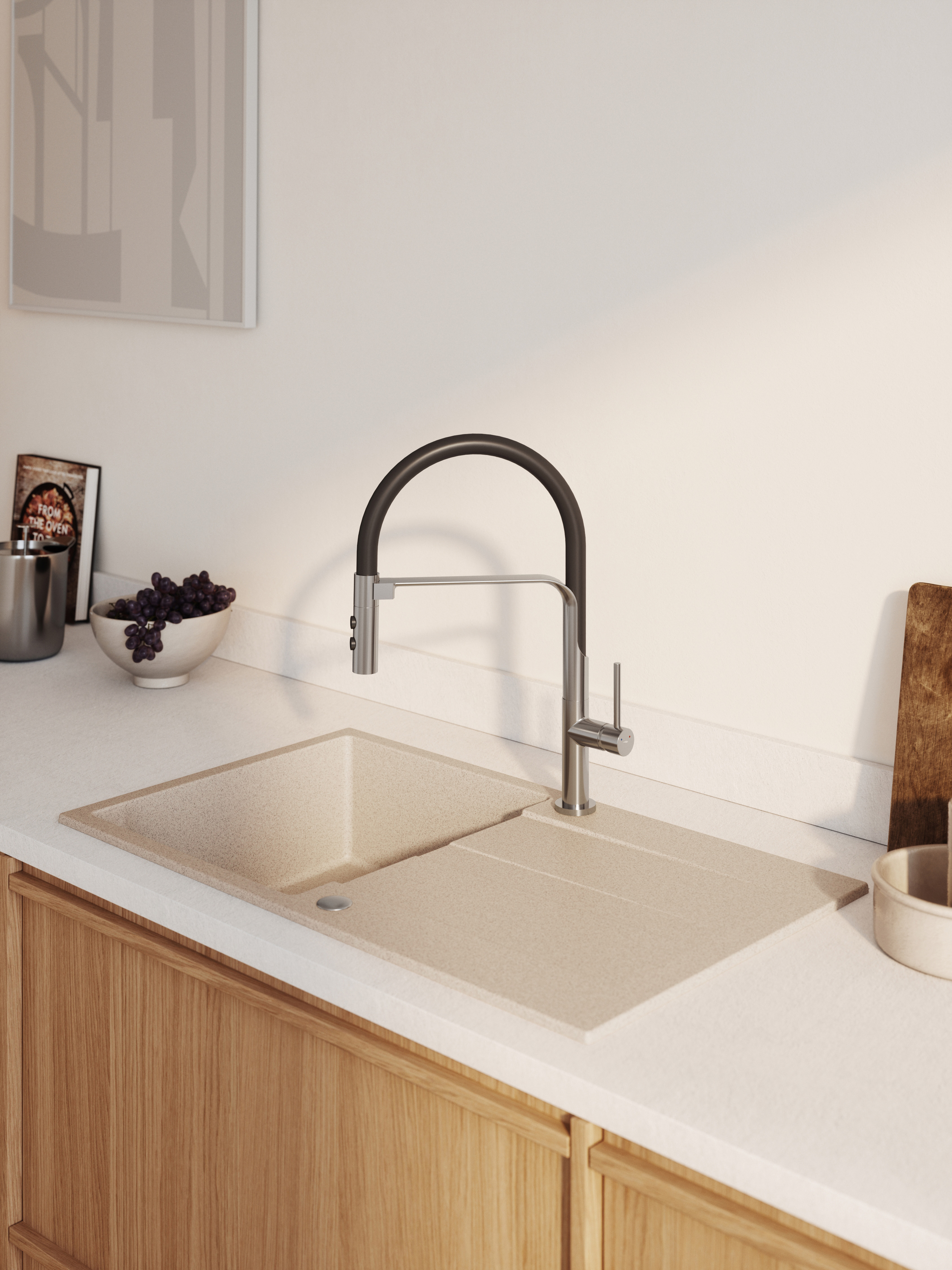
On many models, the drainer has shaped grooves and the correct slope, allowing water to run towards the bowl. This reduces the need to spread towels over the worktop and helps keep the area around the sink dry. The way water drains depends on the construction of the specific product.
The drainer is also useful when preparing meals. It can hold a colander of rinsed vegetables, a wet chopping board or accessories used while cooking. However, the draining surface is not a substitute for a chopping board or a trivet for hot cookware. These uses require suitable accessories or confirmation in the manufacturer's instructions.
If this solution suits your needs, compare granite models in the sinks with drainer category, paying particular attention to the size of the bowl and draining surface.
Sink without a drainer
A sink without a drainer leaves more worktop free, making it a good choice for compact kitchens and kitchenettes. It is also a practical option for people who use a dishwasher every day and need the bowl mainly for rinsing food, filling pots with water and washing individual items.

The absence of an additional draining surface does not mean giving up functionality. Where space is limited, you can choose a deeper or larger bowl if the cabinet and worktop dimensions allow it. This makes large cookware easier to wash even when the sink does not occupy much space along the fitted units.
A sink without a drainer can be a 1-bowl or 2-bowl model. Undermount versions are also available, creating a smooth transition between the worktop and bowl. This installation method requires a suitable worktop material and a correctly prepared cut-out.
If worktop space is limited, compare granite models in the sinks without drainer category with the space available in your kitchen units.
Sink with drainer versus sink without a drainer - key differences
A sink with drainer is more convenient when dishes are frequently washed by hand, while a model without a drainer preserves more worktop space. The final decision depends on how the kitchen is used, not only on its size.
The first difference concerns drying dishes. A sink with drainer provides a permanent surface for wet pots, plates and accessories. There is no need to set up a separate rack or find space for washed items each time. A sink without a drainer requires another solution, such as a mat, an over-the-bowl drying rack or a rack fitted inside a cabinet.
The second consideration is the amount of available worktop space. A Drainer occupies an area that could otherwise be used for chopping food, placing a board or holding a small kitchen appliance. A sink without a drainer makes better use of space, especially when the worktop is short. However, room for any dish-drying accessories must still be considered.
There are also differences in cleaning and daily care. On a model with a drainer, both the bowl and draining surface need to be wiped regularly, especially the grooves where water and mineral deposits can collect. A sink without a Drainer has less surface area to clean, but the area around the bowl still requires care.
How the dishwasher is used also matters. If you hand-wash several items after every meal, a drainer gives them a permanent place to dry. If most items go into the dishwasher and the worktop is used intensively for cooking, the extra draining surface may remain unused.
People who regularly wash large pots or baking trays may benefit more from a spacious bowl without a drainer than from a smaller bowl with a large draining wing. When comparing models, consider not only their overall dimensions but also the actual bowl size.
Advantages and disadvantages of drainers
A drainer helps keep the washing-up area organised but reduces the worktop available for other tasks. Before buying, consider both its usefulness during cooking and the amount of space required for installation and later cleaning.
How practical is a drainer during everyday kitchen tasks?
The greatest advantage of a drainer is that wet items can be placed directly next to the bowl. They do not have to be carried to the other end of the worktop or placed on a separate rack every time.
A draining surface is particularly useful for several tasks:
- Washing large cookware - a rinsed pan, pot or lid can be placed on it without occupying the bowl.
- Rinsing fruit and vegetables - it provides a place for a colander from which water can drain.
- Drying kitchen accessories - washed boards, spatulas or strainers that may not fit conveniently in the dishwasher can be placed on it.
- Cleaning up after cooking - it helps separate washed items from those that still need cleaning.
A fixed drainer also has limitations. If many dishes are left on it, access to the bowl or sink mixer may be less convenient. The draining wing may not always support tall plates or glasses securely. In this case, an additional drying rack is useful.
It is also worth checking whether the drainer grooves direct water into the bowl. Correctly designed drainage reduces the risk of puddles, especially when many wet dishes are regularly placed on the surface.
How much space does a sink with drainer require?
A sink with drainer usually occupies more worktop than a model with a similarly sized bowl but no draining wing. However, its full length does not necessarily have to match the width of the sink base unit.
In many designs, the bowl is positioned above the cabinet while the drainer extends over an adjacent unit. A sink intended for a 60 cm cabinet can therefore be longer overall than the cabinet itself. Installation depends on the manufacturer's minimum cabinet-width requirement and the worktop cut-out dimensions.
Before buying, check:
- The overall sink dimensions - these determine how much worktop space the bowl and drainer will occupy.
- The minimum cabinet width - this indicates which fitted unit is suitable for the model.
- The worktop cut-out dimensions - these must meet the installation requirements of the specific sink.
- The drainer position - it should be on the side that does not obstruct use of the worktop and other fittings.
In a small kitchen, also consider the distance from the wall, hob and other appliances. If installing the drainer would leave only a narrow section of worktop for chopping and preparing food, consider a compact sink without an additional draining wing.
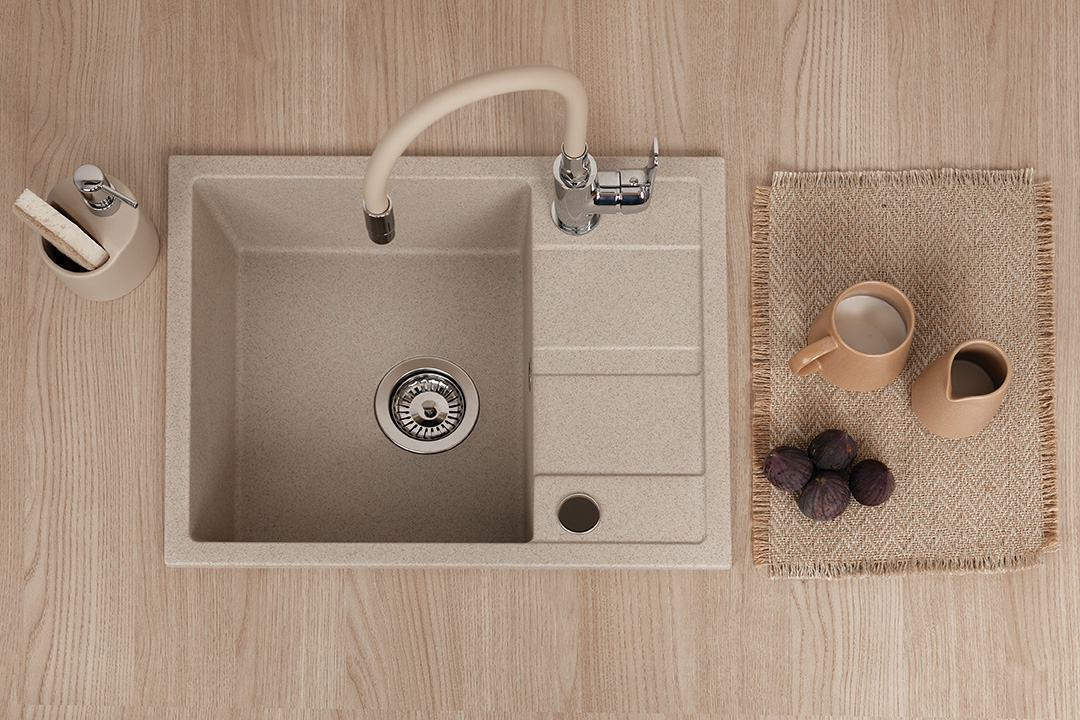
An intermediate solution is offered by granite models in the sinks with half drainer category. Their smaller draining surface can hold individual wet dishes or accessories while occupying less space than a full-size drainer. Compare the overall dimensions of the available models before buying, as a half drainer alone does not guarantee that the sink will fit in every compact kitchen.
Cleaning and maintaining the drainer
A drainer requires regular removal of water and deposits because droplets often remain on its surface after dishes have dried. Once they evaporate, they may leave water marks and mineral deposits, which are particularly visible in hard-water areas.
For daily cleaning, most sinks require only a soft sponge or cloth, water and a mild detergent suitable for the material. After cleaning, rinse the surface and wipe it dry. This prevents cleaning-product residue and standing water from remaining in the drainer grooves.
Adapt the care method to the sink material:
- Stainless steel sink - water marks and fine scratches may be visible on stainless steel. Use soft cleaning accessories and wipe brushed surfaces in the direction of the finish.
- Granite sink - the composite surface requires products approved by the manufacturer. Avoid products that could cause discolouration or damage the material binder.
The points where the draining grooves meet the bowl require particular attention because food residue and deposits may collect there. Remove them regularly instead of allowing hard-to-clean dirt to build up.
When is a sink without a drainer the better choice?
A sink without a drainer is a better option when you want to maximise worktop space and wash dishes by hand only occasionally. This applies especially to kitchens where the dishwasher handles most everyday washing-up.
It is also worth considering a sink without a drainer when:
- You have a small kitchen or kitchenette - a shorter sink leaves more room for chopping, preparing ingredients and using small kitchen appliances.
- You need a large bowl - where the fitted-unit dimensions are limited, the available space can be used to make pots and other large cookware easier to wash.
- You do not want a permanent drying rack on display - drying accessories can be stored in a cabinet and taken out only when needed.
- You want the washing-up area to be easier to clean - a smaller sink surface means fewer places where water and deposits can collect.
A sink without a drainer does not have to make dish drying difficult. You can use a roll-up rack placed over the bowl, a removable basket or a draining mat. A rack fitted over the bowl allows water to drain directly into the waste, but restricts access to part of the sink while in use. A mat placed on the worktop needs to be dried regularly, especially near joints and worktop edges.
Before buying, decide where wet dishes will be placed when they need to be washed by hand. If there is no convenient place for them, even a small drainer may be more functional than an extra section of worktop.
What else should you consider when buying a sink?
In addition to the drainer, check the bowl dimensions, material, installation method and arrangement of the plumbing beneath the sink. These features directly affect the convenience of the washing-up area.
Bowl size and depth
The bowl should allow the largest cookware used at home to be washed comfortably. If you frequently use large pots, pans or baking trays, check not only the sink width but also the internal bowl dimensions and depth. A deeper model helps reduce splashing, although it may require you to lean further forward while washing dishes.
Material
Stainless steel sinks are relatively light and available in many sizes, making them easy to match to different kitchen layouts. Their surfaces may, however, show scratches and marks from drying water.
Granite sinks made from mineral composite and binder are available in different colours and finishes. Their resistance to scratches, discolouration and temperature depends on the material composition and the specifications of the particular product. Check the use and care instructions before buying.
Installation method
An inset sink is installed in an opening prepared in the worktop, with its rim resting on the worktop surface. Undermount models are secured from below, so they require a worktop that resists contact with water around the cut-out edges and a suitable fixing system. Not every sink is suitable for both installation methods.
Position of the sink mixer and drainer
For a sink with drainer, check whether its orientation is fixed or the model can be installed in reverse. Not every sink offers this option, especially when an opening for the sink mixer or additional accessories has been prepared at the factory.
The sink mixer itself should provide convenient access to the bowl. For larger sinks, a mixer with a pull-out spout can make rinsing dishes and cleaning hard-to-reach parts of the bowl easier.
Waste and space beneath the sink
Before installation, check the waste position, space for the siphon and the possibility of connecting a dishwasher. If waste-sorting bins or pull-out drawers are planned beneath the sink, also check that the plumbing will not interfere with their mechanisms. The cabinet size and the arrangement of its internal fittings both matter.
Ultimately, the best sink is one that suits the everyday tasks performed in the kitchen. If you frequently wash dishes by hand and have enough worktop space, a drainer provides a useful place for wet dishes. If you mainly use a dishwasher or need a larger work surface, it is more sensible to use the available space for a suitably large bowl without a drainer.
FAQ - frequently asked questions
Do you need a sink with drainer if you have a dishwasher?
It is not essential, but it is useful for drying items that should not be washed in a dishwasher, such as certain knives, wooden boards or kitchen accessories. If you wash them rarely, a removable drying rack may be sufficient.
Can the drainer be positioned on the left or right side of the sink?
Yes, but this depends on the sink construction. Some models are reversible, while others have a fixed drainer position. Check the installation option and arrangement of the openings before buying.
Will a sink with drainer fit in a 40 cm cabinet?
It is possible if the manufacturer approves the model for installation in a 40 cm cabinet and there is enough worktop space for the drainer. The overall sink dimensions do not have to be the same as the required cabinet width.
Can hot pots be placed on the drainer?
This depends on the material and heat resistance of the specific sink. Do not place cookware taken directly from a hot hob on the drainer unless the manufacturer confirms that this use is permitted.
Is a sink without a drainer suitable for washing large pots?
Yes, provided the bowl has the correct width and depth. Omitting the drainer can make it possible to fit a larger bowl in the same worktop space, making bulky cookware easier to wash.
Can a 2-bowl sink replace a sink with drainer?
The second bowl can be used for placing and rinsing dishes and, with a suitable insert, for drying them. However, it does not provide the same draining area as a sink wing and occupies space intended for the second bowl.
How can you check whether water will drain from the drainer into the bowl?
Check the surface profile, the direction of the grooves and the product documentation. A drainer with the correct slope allows water to flow into the bowl, but models can differ in construction.
What should you do if water marks remain on the drainer?
After washing up, rinse the drainer with clean water and wipe it with a soft cloth. If deposits have already appeared, use a product intended for the sink material and follow the manufacturer's instructions.


